
Imagine: You are the director of an animal shelter. During the last week of February, your shelter took in 48 dogs. Now the spring birthing season — when intake numbers traditionally spike — is upon you. You’ve been working hard to increase the shelter’s adoption rates, but you can’t call the shelter No Kill – not yet, not by a long shot; healthy dogs are still put down daily to make room for those that will inevitably come through the door. Unfortunately, your situation is echoed throughout the United States, primarily in the South, where studies show spay and neuter rates are lower than in any other region. This leads to more dogs having more litters, and that, of course, leads to more crowded shelters.
Now in comes a pregnant stray. Shelter volunteers name her Maple – she’s a friendly retriever mix with red-gold fur and a sweet disposition.
You get that all-too-familiar sick feeling deep in your stomach.
The law prohibits you from adopting out dogs that have not been spayed or neutered. That means you can’t release Maple unless she is spayed, and spaying will kill her puppies. If you hold Maple until she births her pups, you will have to kill other dogs to open up space for her litter.
You ask yourself: Does it make more sense to euthanize puppies yet to be born or to euthanize those that are already living? The decision is yours; you must make it.
***
In too many shelters across the country, shelter directors make life and death decisions daily. There is just not enough room in overcrowded shelters to house all the dogs that are picked up as strays or surrendered by their owners. These are healthy dogs, adoptable dogs, dogs that would make great pets.
Finding homes for the country’s homeless dogs must be a priority, or shelters will continue to use euthanasia to control their populations, and euthanasia due to homelessness will remain the leading cause of canine death in the United States. But as the spring mating season is upon us, there is something dog owners can do to stem the flow of new litters: Spay and neuter your pets, and encourage others to spay and neuter theirs. Veterinarians say you and your pet will reap the benefits:
- Altered pets live longer, healthier lives. (Females will not get ovarian or uterine cancer; males will not get testicular cancer and are less likely to suffer from prostate disease.)
- Altered pets are easier to train.
- Altered pets have less desire to roam, making them less likely to become lost or hit by a car.
- Altered pets have fewer behavior and temperament problems.
- Altered pets tend to be less aggressive, yet they remain protective of their families.
***
There is an abundance of information online regarding the reasons to, and the benefits of, spaying and neutering your pet. Here’s a link to get you started, should you want to learn more: American Humane Association.
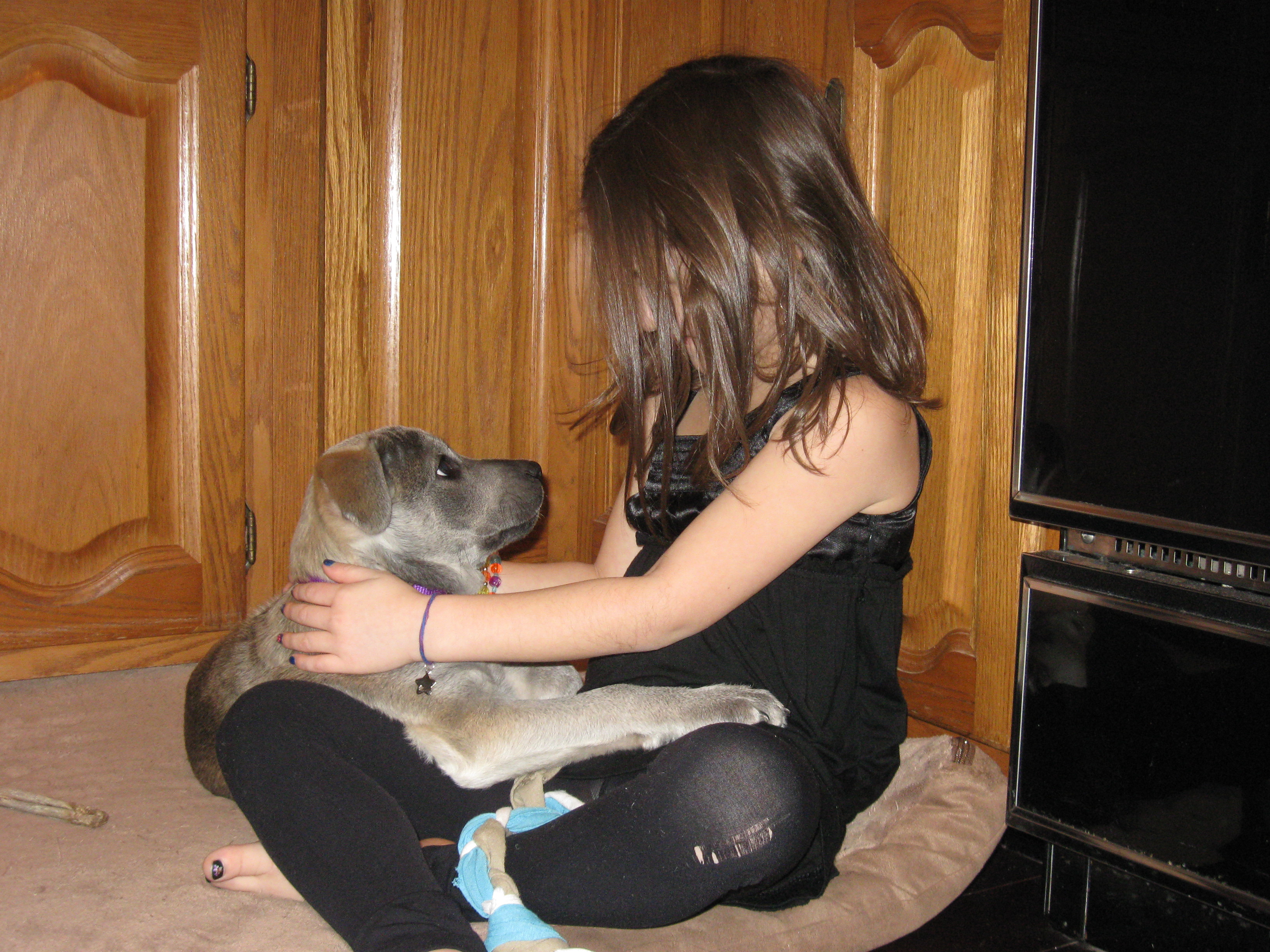

 she's a dork