
Naming a dog can cause as much consternation as naming a baby. After all, a name stays with a person – or a dog – for a lifetime (usually).
Last year, the most popular dog names were Bella, Bailey, Max, Lucy, Molly, Buddy, Daisy, Maggie, Charlie, and Sophie, according to VPI, a pet insurance company. Spot, Rover, and Fido didn’t make the cut.
Giving pets “people” names dates back to the 1960s, but picked up during the 1980s, according to UC Berkeley anthropologist Stanley Brandes, who studied pet naming trends as revealed by gravestones at a pet cemetery outside New York City. Today’s “pets-with-people-names-craze” as VPI calls it, reflects another evolution of the last several decades: treating dogs as kin.
Prior to World War II, Brandes found that pets rarely shared names with people. In the first 50 years of the 20th century, stones were engraved with names like Brownie and Boogle, Hobo and Jaba, Punch and Pippie.
Kevin and I named our first dog – who we’ve always considered our first child – Gryffin. We wanted a unique name that would have special meaning for us. At the time I was reading the Harry Potter series on Kevin’s recommendation, so we looked to the boy wizard for inspiration. Harry, we agreed, was too blatant a choice; Gryffin, short for Gryffindor, now that had a nice ring.
When we adopted Galen after Gryffin died, we turned to religion for inspiration. In Judaism it is customary to name a baby after a relative who has passed away – it is said this keeps the person’s memory alive, and in a metaphysical way forms a bond between the soul of the newborn and of the deceased family member. It was a given for us that our new pup would be named after Gryffin. Going through “G” names we came upon “Galen,” the name belonging to an Ancient Greek physician. As Kevin is a doctor, “Galen” held a welcome secondary meaning. Then a web search revealed Galen means “calm,” which is, of course, the canine temperament we were hoping for in our new dog.
What I didn’t know when choosing Galen’s name or Gryffin’s, is that there are rules for naming dogs proffered by people reporter Jan Hoffman calls “self-anointed dog-naming experts.” Hoffman’s story in today’s New York Times recounts her family’s quest to find the perfect name for their Havanese. Most interesting to me was the advice she got from the Monks of New Skete: “Avoid human names.” People who don’t, the monks say, tend to anthropomorphize their pets.
Hmmm. Based on those popular dog names, there’s a lot of anthropomorphizing going on in America these days.
***
George Washington owned a dog named Lady. Abraham Lincoln owned a dog named Fido.
The monks would have approved.



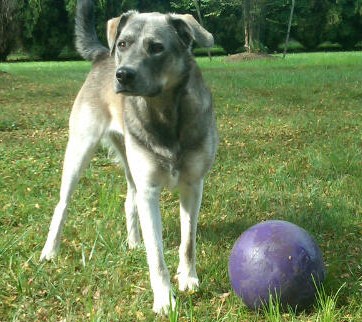
 she's a dork